FIELD GUIDES / START HERE
How to cook without oil
Almost everything oil does in a pan, something else can do: water and broth keep food from sticking, parchment and a good nonstick pan let it brown, and blended nuts, seeds and beans make sauces creamy. Here's how, method by method.
Why bother? One tablespoon of olive oil adds about 119 calories and no fiber or protein. The numbers, and the feeding studies behind them, are on our oil-free dressing page and the Weight desk.
Sauté with water or broth
Instead of oil to start onions and garlic: a few spoonfuls of water or unsalted broth.
- Heat the pan over medium heat first, then add the chopped onion with 2 tablespoons of water or broth.
- Stir often and add another splash only when the pan looks dry. You want a thin film of liquid, not a puddle.
- When browned bits stick, add a splash and scrape them up. That's flavor, and it ends up in the dish.
- Add garlic and ground spices near the end, mixed with a little water so they don't scorch.
- Cook with Water, Broth and No Oil
Learn to control heat and moisture, loosen browned bits and make creamy sauces and crisp edges without oil.
- Soften Soup Vegetables with Water Instead of Oil
Soften onion, carrot and celery with small additions of water before adding the soup liquid.
- Mix Ground Spices with Water Before Adding to Soup
Mix ground spices with water or broth, then warm the paste briefly before adding the soup liquid.
Try it tonight
Smoky Red Lentil & Tomato Stew
Warm spices and tomato turn red lentils into a comforting, spoonable supper.
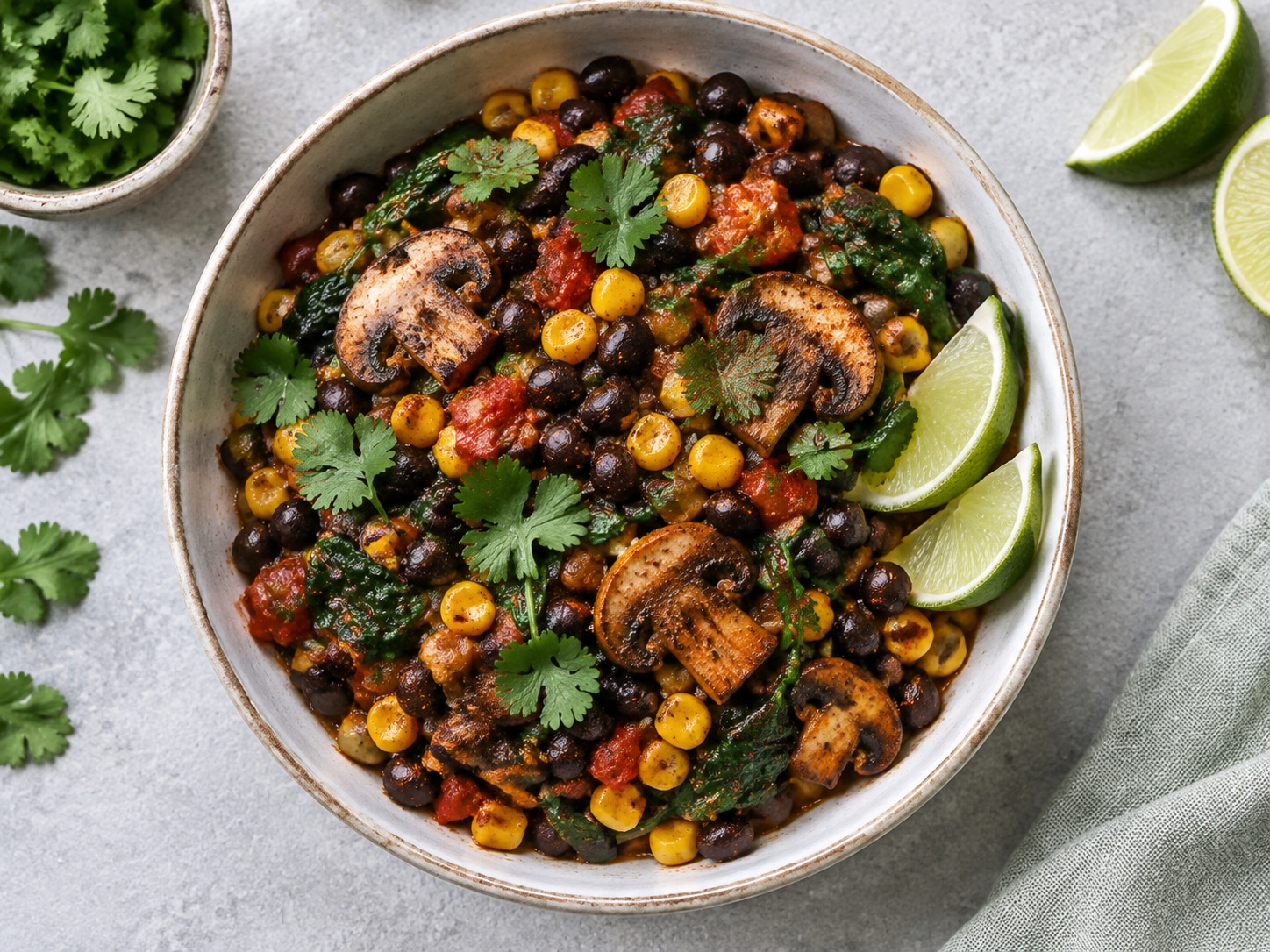
Smoky Black Bean, Mushroom & Corn Skillet
A smoky, cumin-scented pan brings mushrooms and beans together for a quick supper.
Parsley Lentil and Swiss Chard Soup
Parsley stems perfume the lentil broth, while lemon, tender chard and toasted seeds keep every spoonful lively.
Roast vegetables without oil
Instead of tossing in oil: dry vegetables, parchment paper and room on the tray.
- Line the tray with parchment or a silicone mat so nothing sticks.
- Pat the vegetables dry and spread them out so they don't touch. Crowded vegetables steam instead of browning.
- Season after washing and drying; a squeeze of lemon or a spoon of chickpea cooking liquid helps spices stick.
- Turn once, patiently, after the bottoms have browned and released.
- Roast Vegetables with Dry Surfaces and Patient Turning
Use cut size, tray contact and a late flavor finish to roast vegetables without a coating.
- Line the Pan and Leave Room for Crisp Edges
Choose a liner for the food, then manage spacing and steam rather than adding surface fat.
- Add Vegetables to the Roasting Tray in Stages
Roast carrots, cauliflower, zucchini and tomatoes without oil, adding each when it needs to start cooking.
- Sheet pans and liners without the grease
Release the food, not a slick of oil. What to look for, the compromises, and what you can use instead.
Try it tonight
Potato, Kale and Chickpea Tray with Lemon-Caraway Mash
A covered tray keeps potatoes tender while greens and a lemon-garlic bean sauce finish the dish.
Roasted Celery Root Steaks with Lentil Parsley Crumble
Thick root-vegetable slices get a hearty topping of crushed lentils, walnuts and fresh herbs.
Mushroom, Walnut and Lentil Lettuce Boats with Roasted Sweet Potato on the Side
A finely chopped mushroom-and-legume filling meets crisp leaves and roasted sweet potatoes.
Sear and griddle in a dry pan
Instead of a slick of oil: a good nonstick or well-heated pan and a little patience.
- Preheat the pan over medium heat. Food added to a cold pan sticks.
- Lay the food down and leave it alone until it releases on its own.
- For vegetables, add a spoonful of water and cover for a minute to cook them through, then uncover to brown.
- For pancakes and crêpes, a thinner batter and a moderate heat keep them from sticking.
- Sear Without a Drop of Oil
How we get a browned crust on tofu, mushrooms and griddle cakes in a dry hybrid pan, and how a splash of water releases anything that sticks.
- Get Oil-Free Waffles and Pancakes to Release
Use a suitable cooking surface, patient timing, and one small test portion before committing the batter.
Try it tonight
Lemon Bulgur Chickpea and Broccoli Skillet
Nutty bulgur catches tomato juices beneath browned broccoli, with toasted almonds for crunch.
Spinach Chickpea Breakfast Crepes with Tomato Chop
Thin pulse crepes turn a quick raw tomato mixture into a sit-down breakfast.
Strawberry Apple Griddle Cakes
Warm cinnamon meets fresh berry slices and tender, lightly browned cakes.
Stir-fry without oil
Instead of a wok full of oil: small batches, a hot pan and the sauce mixed ahead.
- Mix the sauce before you turn on the heat; there's no time once the pan is going.
- Cook in small batches so the pan stays hot and the vegetables sear rather than stew.
- Add a splash of water or broth when things start to catch, then let it cook off.
- Pour in the sauce at the end and toss until it coats everything.
- Cook an Oil-Free Stir-Fry in Small Batches
Cook ingredients in separate batches so the pan stays hot rather than crowded and watery.
- Mix the Stir-Fry Sauce Before the Pan Gets Hot
Mix the sauce ahead, thicken it with a separate starch mixture and add it at the end of cooking.
Try it tonight
Steam, then season
Instead of buttered vegetables: steam them bright and finish with a sauce.
- Bring an inch of water to a boil under a steamer basket and keep the lid on.
- Time each vegetable separately; dense roots take longer than greens.
- Lift them out while they still have some bite, and don't let them sit in the water.
- Finish with lemon, herbs or one of the sauces below.
- Time Vegetables in a Steamer Basket
Use consistent cuts and separate timers to make a dependable vegetable side.
- Keep Steamed Food from Sitting in Water
Drain steamed food and handle the lid carefully to keep water from pooling on the plate.
- A steamer that fits your everyday pot
Vegetables with nothing between them and steam. What to look for, the compromises, and what you can use instead.
Try it tonight
Steamed Cauliflower with Warm Lentil Olive Chop
A warm chopped topping brings briny contrast to tender florets and potatoes.
Ginger Tempeh and Cabbage Steam-Braise
Fresh ginger and lime bring brightness to tender cabbage, carrot matchsticks and steamed tempeh.
Lemon Lentil and Asparagus Quinoa Plate
Tender asparagus and warm legumes turn fluffy grains into a fresh, lemony plate.
Bake without oil
Instead of oil or butter in batters: applesauce, mashed banana, prune purée or ground flax.
- Swap the fat for a fruit purée; it keeps bakes moist but makes them softer and denser, so expect a different crumb.
- Line pans with parchment or use silicone so bakes release without greasing.
- For bean patties and loaves, mashed beans and ground flax hold things together without egg or oil.
- For a crisp topping, use whole-grain crumbs with ground nuts or seeds, and bake until golden.
- Balance Applesauce and Banana in Breakfast Bakes
Measure applesauce and banana as wet ingredients and adjust breakfast batters for their moisture.
- Make Thick Prune Purée for Soft Bakes
Blend soaked prunes into a thick paste and learn how to use it in soft bakes.
- Make Bean Patties Hold Their Shape
Balance mash, moisture, and resting time before the patties reach the oven.
- Make a Crisp Crumb Topping Without Added Oil
Prepare a dry crumb topping and add it so it stays crisp above the soft filling.
Try it tonight
Buckwheat Red Bean Patties with Apple Cabbage Slaw
Smoky bean patties meet a crunchy, lemon-dressed slaw with grated apple.
Green Lentil Shepherd Tray with Parsnip Potato Top
A fork-ridged mash covers a thyme-scented filling of lentils, carrots and peas.
Broccoli Tofu Potato Bake with Sunflower Cream
A lemon-dill seed sauce brings sliced potatoes, broccoli and tofu together in one baking dish.
Let an air fryer or pressure cooker help
Instead of deep frying: hot moving air. Instead of a long, oily braise: pressure.
- An air fryer browns potatoes and vegetables with no oil at all; shake the basket halfway and don't overfill it.
- A pressure cooker's sauté setting works with water or broth just like a pan.
- Beans and whole grains cook fast under pressure, which makes oil-free meals from scratch easier on a weeknight.
- Air fryers for an oil-free kitchen
Crisp edges, no oil spray. What to look for, the compromises, and what you can use instead.
- Beans, Grains and Stews Under Pressure
How we use an Instant Pot for oil-free cooking, from water sautéing to safe release, and how the maker says to care for it.
- Set a Bean Timer, Then Check the Beans
Use pressure-cooker timings as a starting point, then check that the beans are tender.
- Countertop ovens for roasting vegetables
Roast dinner without taking over the big oven. What to look for, the compromises, and what you can use instead.
Make sauces and dressings creamy
Instead of oil or cream: blended nuts, seeds, beans or tofu.
- Blend a small amount of nuts, seeds or cooked white beans with water, lemon and seasoning.
- Add water slowly; you can always thin a sauce but it's harder to thicken it.
- Tahini, cashews and white beans are the easiest places to start.
- Blend Creamy Sauces Without Oil
How a high-powered blender replaces oil in sauces, dressings and soups, and how Vitamix says to keep the machine clean and running.
- Finish a Sauce Three Different Ways
Compare lemon juice or vinegar, fresh herbs and mashed cooked vegetables as ways to finish a sauce.
- Whisk Tahini and Water into a Smooth Dressing
Add water to tahini in stages to make a smooth, pourable dressing without added oil.
Five quick oil-free salad dressings →
Try it tonight
Shopping and eating out
- Pantry Basics: Oil-Free Staples
Broth, spice blends, savory sauces, creamy dressings, fruit sweeteners, plant milk and roasted aromatics: the building blocks that let a NANO kitchen cook without oil.
- Check Each Part of a Packaged Meal for Added Oil
Check the base, sachets and toppings as separate ingredients.
- Explain Your Oil-Free Order to the Restaurant
Learn how to ask restaurant staff for a meal prepared without oil or animal ingredients.
- Dining Out Without Oil or Animal Ingredients
Learn what to ask restaurant staff when ordering food without oil or animal ingredients.