Whole grains and future hypertension: a cohort signal, not a trial
Prospective-study estimates linked higher whole-grain intake with lower hypertension risk, but the authors rated the evidence low.
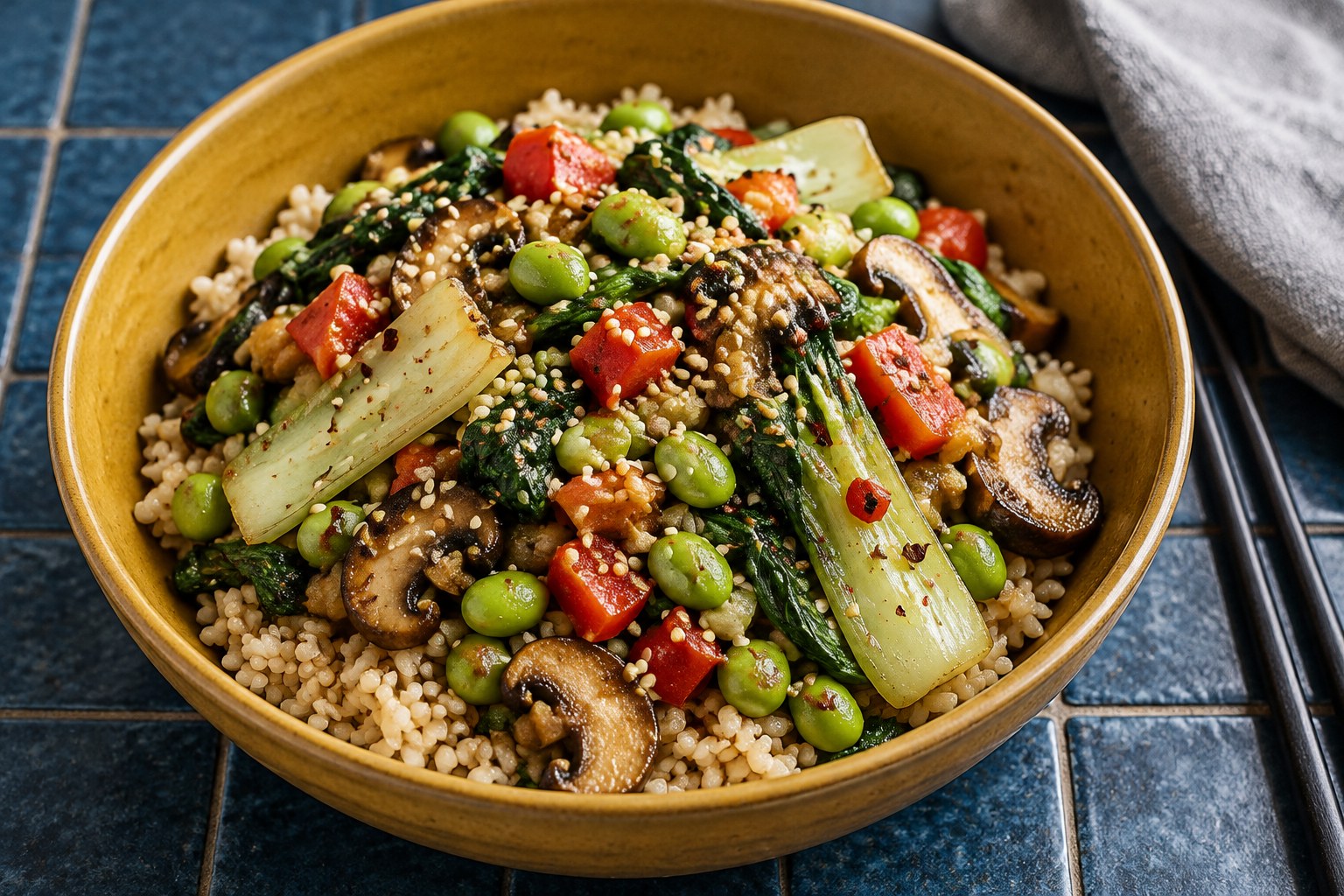
Illustrative food image, not a photograph of the study intervention.
Following diets before hypertension develops
A 2017 systematic review by Schwingshackl and colleagues examined prospective studies of food groups and hypertension risk. The review included 28 reports across 12 major food groups and searched PubMed, Scopus and Web of Science through June 2017. Its endpoint was the development of hypertension, rather than a short-term change in an existing blood-pressure reading. That distinction gives it a different role from a feeding trial. Prospective observation can identify patterns in later risk, but participants were not randomly assigned to different whole-grain intakes. The resulting estimates should be described as associations, not proof that a particular serving prevents hypertension.
Schwingshackl L, Schwedhelm C, Hoffmann G, Knüppel S et al.. Advances in nutrition (Bethesda, Md.), 2017. PMID 29141965 · DOI
The whole-grain estimate
In the linear dose-response analysis, each 30 g per day increment of whole grains was associated with a relative risk of 0.92 for hypertension. The 95% confidence interval was 0.87 to 0.98. Expressed relatively, that is an estimated 8% lower risk, not an eight-percentage-point reduction in an individual's absolute probability. The abstract does not supply a baseline absolute risk from which to calculate a personal benefit. It also reports an indication of a nonlinear relationship for whole grains. That makes it especially inappropriate to multiply the linear estimate indefinitely or treat every additional increment as a guaranteed identical risk reduction.
Schwingshackl L, Schwedhelm C, Hoffmann G, Knüppel S et al.. Advances in nutrition (Bethesda, Md.), 2017. PMID 29141965 · DOI
Fruit provides a second, separate signal
The same analysis reported a relative risk of 0.97 per 100 g per day of fruit, with a 95% confidence interval of 0.96 to 0.99. As with whole grains, this was an observational association with hypertension risk. The researchers also detected an indication of a nonlinear relationship for fruit. These two food-group results should not be combined into a numerical promise for a breakfast containing both ingredients. The review analyzed food-group intake patterns; it did not randomize a fruit-and-grain meal against a control breakfast. A suggested recipe illustrates the foods without becoming the intervention that the cohorts never tested.
Schwingshackl L, Schwedhelm C, Hoffmann G, Knüppel S et al.. Advances in nutrition (Bethesda, Md.), 2017. PMID 29141965 · DOI
Keep the evidence grade attached
The authors explicitly described the quality of the meta-evidence as very low to low. That warning belongs alongside the attractive risk estimates, rather than in an invisible footnote. The review used random-effects models and examined both high-versus-low intake comparisons and dose-response relationships, but statistical synthesis does not turn prospective observational reports into randomized experiments. For whole grains, the 0.92 relative risk per 30 g daily is a useful description of the pooled pattern. It remains insufficient to promise prevention, prescribe a therapeutic quantity, or claim that one whole-grain recipe independently lowers a person's future risk of developing hypertension.
Schwingshackl L, Schwedhelm C, Hoffmann G, Knüppel S et al.. Advances in nutrition (Bethesda, Md.), 2017. PMID 29141965 · DOI