The microbiome is not a diversity contest.
Whole-grain feeding studies offer clues about microbial function—not a universal gut-health score.
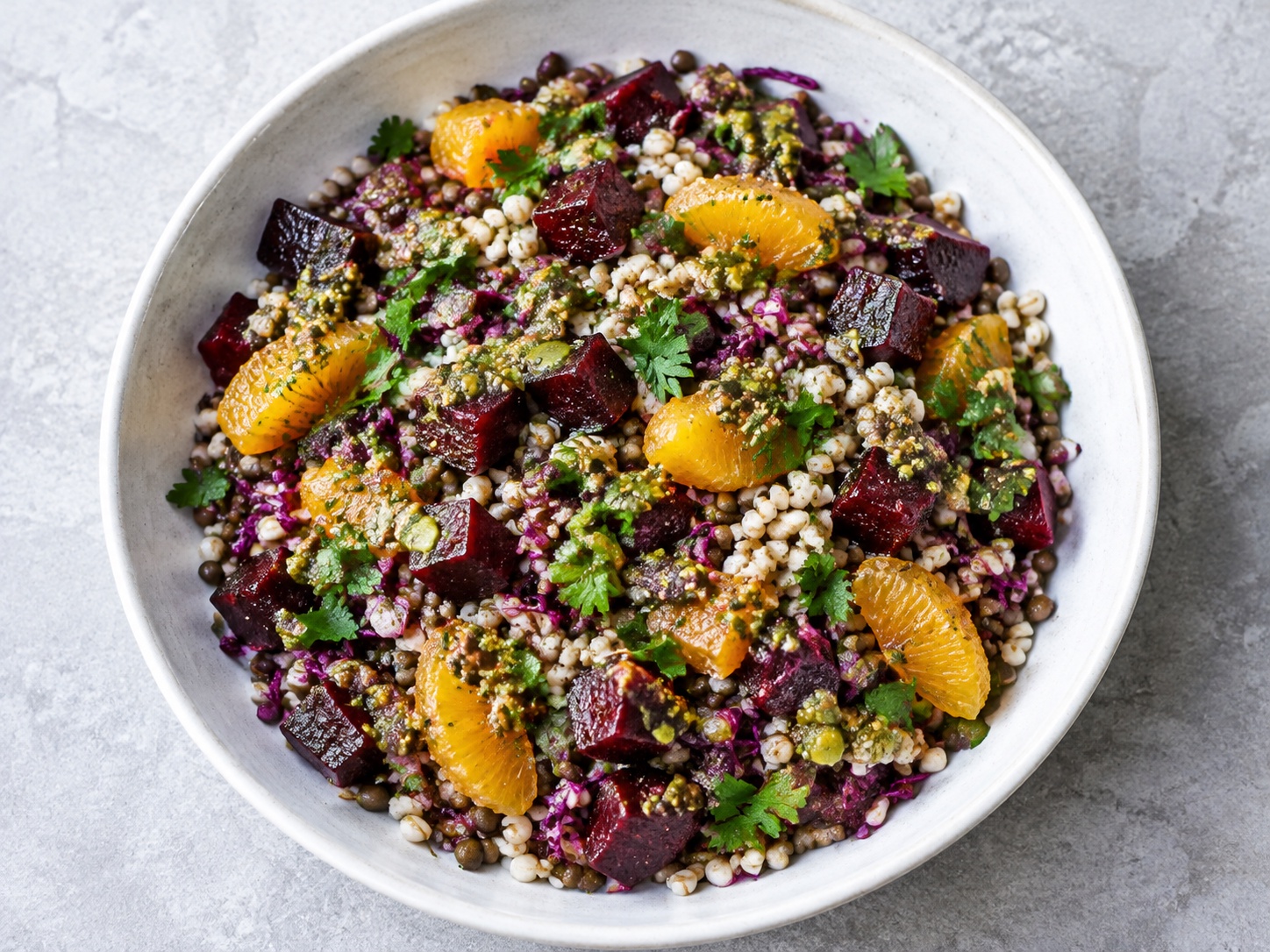
Illustrative food image, not a photograph of the study intervention.
What changed in the grain experiment?
Martínez and colleagues gave healthy adults whole-grain barley, brown rice or a combination in short crossover periods. Microbial composition and diversity changed along with some inflammatory and post-meal glucose measures. The experiment was small and short; it did not test treatment of a digestive disorder.
Martínez I, Lattimer JM, Hubach KL, et al.. The ISME Journal 7:269–280, 2013. PMID 23038174 · DOI
Function can change without a diversity increase.
In Wastyk’s later randomized study, the high-fiber arm increased microbiome carbohydrate-degrading capacity without increasing microbial diversity. Results reported for the fermented-food arm cannot be reassigned to plant fiber. The differing findings are a reason to examine study methods, not to rank meals by a single diversity number.
Wastyk HC, Fragiadakis GK, Perelman D, et al.. Cell 184:4137–4153.e14, 2021. PMID 34256014 · DOI
Bring it back to the kitchen.
Our salad uses hulled barley and cooked lentils; its cooking time assumes the lentils and beets are already prepared. The seed dressing is kept separate for meal preparation. These choices make a whole-food meal workable, not clinically validated. Persistent digestive symptoms need individual assessment.