Red meat versus non-meat protein: what a TMAO trial can tell us
Controlled feeding raised a gut-microbiota-linked metabolite, but did not measure adenomas or cancer.
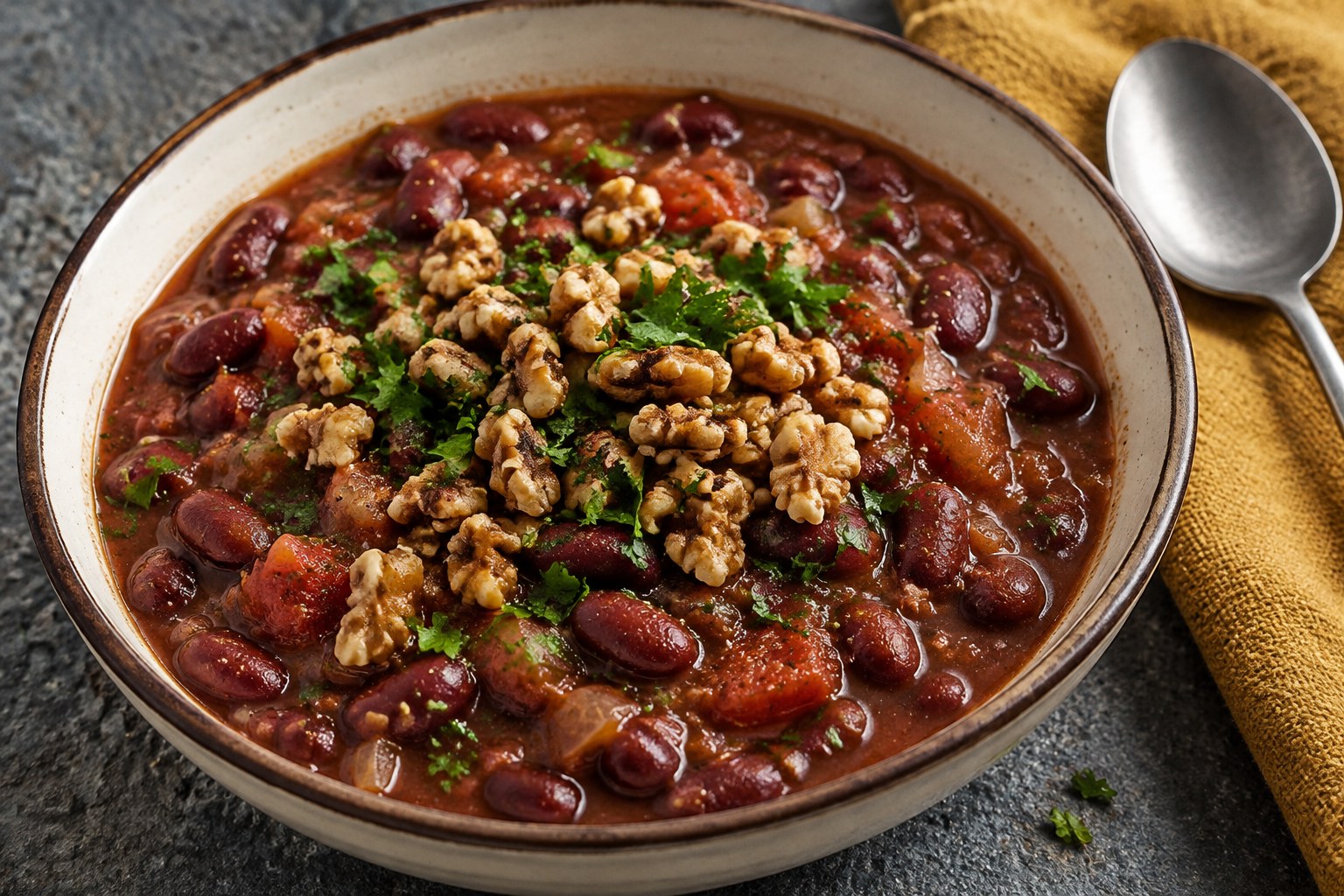
Illustrative food image, not a photograph of the study intervention.
Protein sources compared under controlled feeding
A randomized crossover study enrolled 113 volunteers and compared red meat, white meat, and non-meat protein diets. Participants were assigned to high- or low-saturated-fat arms; within each arm, each protein-source diet lasted four weeks, with washouts between periods. Meals came from a metabolic kitchen, were isocaloric, and supplied 25 percent of calories as protein. This was therefore a controlled protein-source comparison rather than a questionnaire about habitual meat intake. The abstract calls the comparator non-meat protein; it does not establish that the entire comparator menu met a strictly vegan, whole-food, no-added-oil definition.
Wang Z, Bergeron N, Levison BS, Li XS et al.. European heart journal, 2019. PMID 30535398 · DOI
TMAO increased on the red-meat diet
Chronic red-meat intake increased both plasma and urine trimethylamine N-oxide, or TMAO, more than twofold, with P values below 0.0001. White-meat and non-meat intake did not produce that same reported increase in circulating and urinary TMAO. Saturated-fat assignment did not affect TMAO or its metabolites in the abstract’s account. These findings locate the result in the protein-source comparison rather than supporting a claim that all meat categories produced identical responses. TMAO was the measured metabolic endpoint, and the magnitude of its change should not be translated into a matching change in disease risk.
Wang Z, Bergeron N, Levison BS, Li XS et al.. European heart journal, 2019. PMID 30535398 · DOI
Production and excretion both mattered
The investigators found that red meat reduced fractional renal excretion of TMAO. In an isotope-tracer subset of 13 participants, both red and white meat increased production of TMA and TMAO from carnitine compared with non-meat protein, but not from choline. This distinction helps explain why a single blood concentration should not be described as a direct tally of one bacterial activity. The study examined nutrient precursors, microbial metabolism, and renal handling together. Its abstract also reports that discontinuing red meat reduced plasma TMAO within four weeks, placing the change within the experimental dietary timescale.
Wang Z, Bergeron N, Levison BS, Li XS et al.. European heart journal, 2019. PMID 30535398 · DOI
Not an adenoma or processed-meat trial
This study did not report colorectal adenomas, cancer incidence, or cardiovascular events as its outcomes. Nor does its abstract supply a distinct processed-meat comparison. It would therefore be inaccurate to use its TMAO result as proof that replacing processed meat with beans prevents colorectal lesions. A bean soup is a relevant non-meat meal idea, not the controlled menu itself or a clinically proven preventive treatment. The randomized design supports an effect of the studied diets on short-term TMAO metabolism; it does not close the separate question of how much changing this marker alters long-term clinical risk.
Wang Z, Bergeron N, Levison BS, Li XS et al.. European heart journal, 2019. PMID 30535398 · DOI