Leafy greens and nitrate pills did not produce identical oral signals
A trial in people with high blood pressure measured oral microbes and saliva, not cardiovascular events.
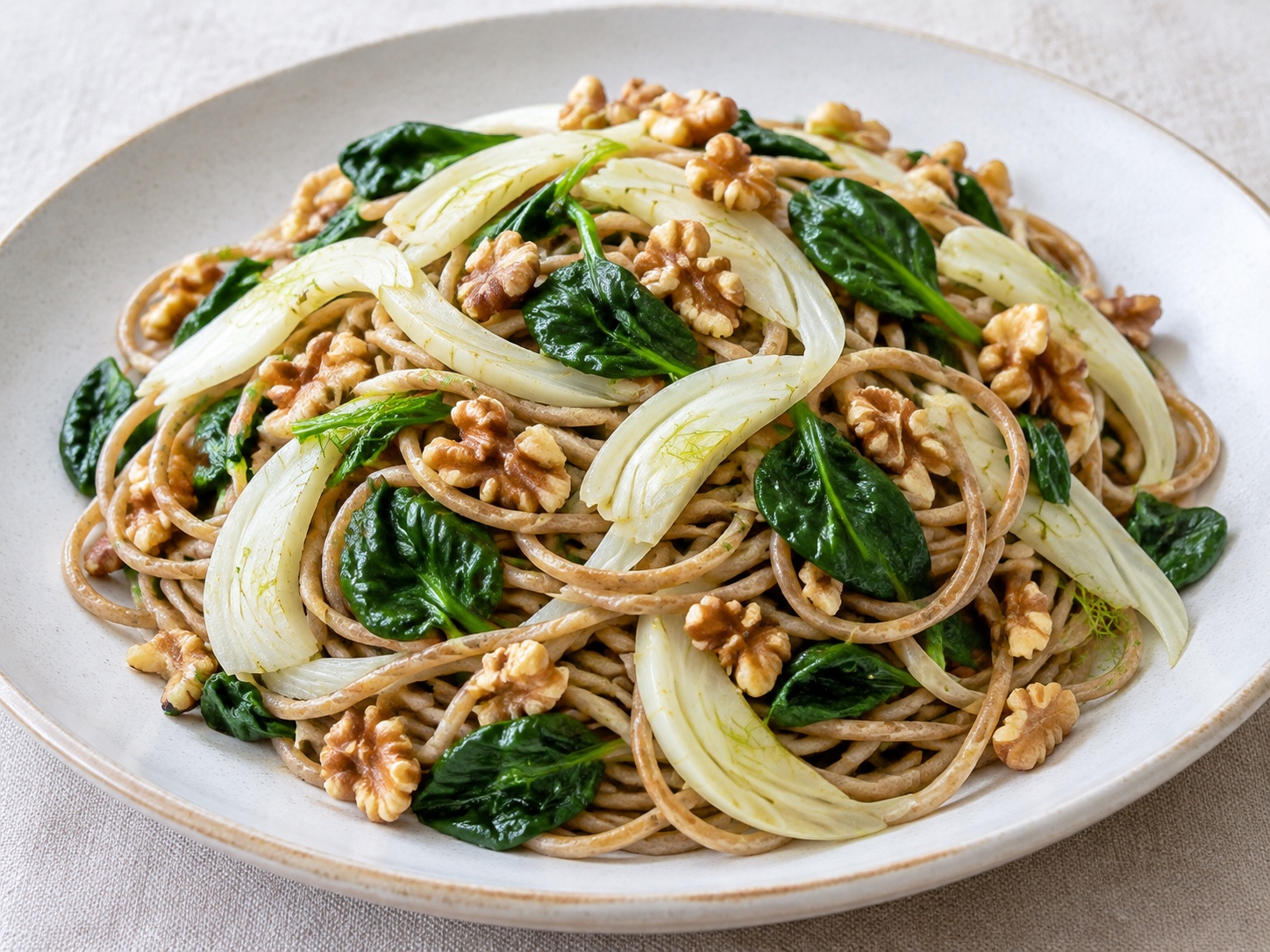
Illustrative food image, not a photograph of the study intervention.
High blood pressure describes the participants
Seventy people with high blood pressure were randomly assigned to three dietary groups for five weeks. One group consumed leafy vegetables supplying 300 milligrams of nitrate daily. Another received potassium nitrate pills supplying the same nitrate amount with low-nitrate vegetables. A third received potassium chloride placebo pills with low-nitrate vegetables. The analyzed outcomes were oral microbiome composition and salivary biomarkers before and after the intervention. High blood pressure identifies the study population; it does not turn every outcome in this paper into a demonstrated blood-pressure benefit or a cardiovascular treatment result.
du Toit L, Sundqvist ML, Redondo-Rio A, Brookes Z, et al.. The Journal of nutrition, 2024. PMID 39019159 · DOI
Some microbial changes were shared
The leafy-vegetable and nitrate-pill groups showed several similar changes in oral microbes. Both had increases in organisms including Neisseria and Capnocytophaga, alongside decreases in several other reported groups. The authors describe these shared shifts as probably nitrate-dependent. That wording is appropriately cautious: the experiment compared interventions and microbial responses rather than proving a complete biological pathway. A change in the abundance of a named organism is also not itself a diagnosis or a clinical outcome. The abstract supports describing a pattern of microbial change, not labeling the entire mouth healthy.
du Toit L, Sundqvist ML, Redondo-Rio A, Brookes Z, et al.. The Journal of nutrition, 2024. PMID 39019159 · DOI
Other signals distinguished the vegetable group
Both active interventions increased salivary pH. Only the leafy-vegetable intervention showed increased salivary buffering capacity and reduced lactate, according to the abstract. Additional microbial changes in the vegetable group were described as potentially nitrate-independent. These differences are the reason the food-versus-pill comparison matters. Equal nitrate delivery did not mean every reported salivary response was identical. Still, the findings do not identify which other vegetable component produced the differences, and they do not establish that a specific leafy species or preparation was responsible for the observed biomarker pattern.
du Toit L, Sundqvist ML, Redondo-Rio A, Brookes Z, et al.. The Journal of nutrition, 2024. PMID 39019159 · DOI
Keep saliva separate from clinical disease
The authors frame the findings as potentially improving oral-health biomarkers, a narrower conclusion than preventing oral disease or cardiovascular events. Five weeks of microbial and salivary measurements cannot supply an unreported long-term clinical endpoint. Nor does this abstract establish a blood-pressure reduction from the leafy-vegetable assignment. The linked spinach-containing pasta is a relevant leafy-green meal, not a verified way to deliver the study nitrate amount. The defensible lesson is about differences between whole-food and nitrate-pill interventions at the biomarker level, without turning either option into a replacement for clinical care.
du Toit L, Sundqvist ML, Redondo-Rio A, Brookes Z, et al.. The Journal of nutrition, 2024. PMID 39019159 · DOI