Plant-based scores diverged on kidney risk in the ARIC cohort
A long-running cohort distinguished healthier from less healthy plant-based patterns rather than treating all plant foods alike.
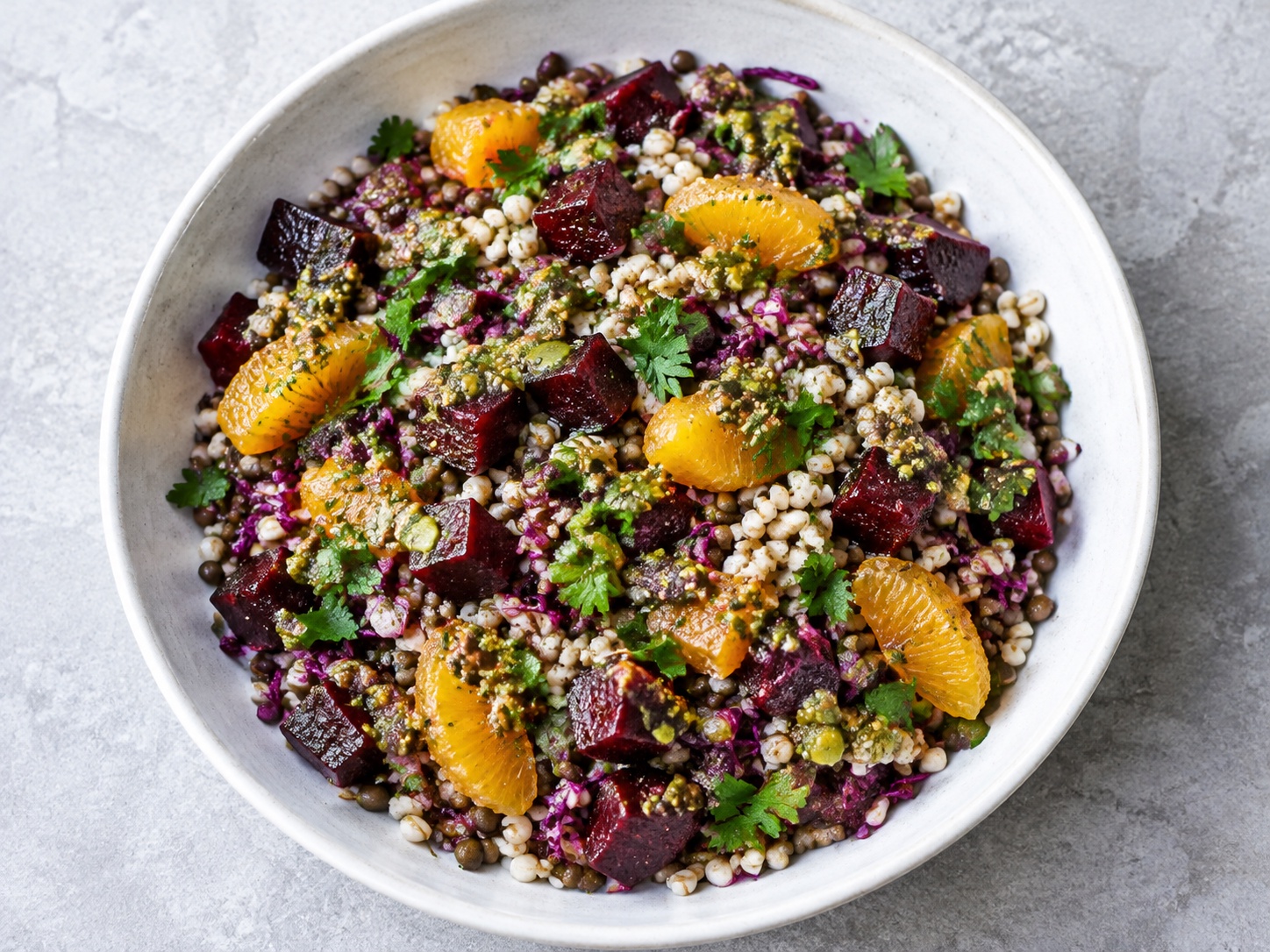
Illustrative food image, not a photograph of the study intervention.
Four scores, one important distinction
This study followed 14,686 middle-aged adults in the Atherosclerosis Risk in Communities cohort and characterized their diets with four plant-based indices. One index positively scored all plant foods; another positively scored only healthful plant foods. A provegetarian score emphasized selected plant foods, while a less healthy plant-based score positively scored only less healthful plant foods. Every index negatively scored animal foods. That construction matters: the scores were not simply labels for vegetarian versus nonvegetarian participants. The investigation could compare different versions of plant emphasis within a population. It therefore addresses dietary pattern quality, rather than whether any single ingredient prevents chronic kidney disease.
Kim H, Caulfield LE, Garcia-Larsen V, Steffen LM et al.. Clinical journal of the American Society of Nephrology : CJASN, 2019. PMID 31023928 · DOI
A long follow-up and an association
Over a median follow-up of 24 years, investigators recorded 4,343 incident CKD cases. For the healthy plant-based index, the highest versus lowest fifth of adherence had a hazard ratio of 0.86, with a 95% confidence interval of 0.78 to 0.96. The trend across the score was also statistically significant, with P=0.001. Researchers used Cox proportional hazards models with adjustment for confounders. These figures describe a relative association between score groups, not the absolute probability that an individual will develop CKD. Because diet was not randomly assigned, the estimate should not be presented as proof that adopting the pattern would prevent 14% of cases.
Kim H, Caulfield LE, Garcia-Larsen V, Steffen LM et al.. Clinical journal of the American Society of Nephrology : CJASN, 2019. PMID 31023928 · DOI
The less healthy score went the other way
Higher adherence to the less healthy plant-based index was associated with higher, not lower, incident CKD risk. Comparing the highest with the lowest fifth gave a hazard ratio of 1.11, with a 95% confidence interval of 1.01 to 1.21 and a trend P value of 0.04. The provegetarian index showed an association in the other direction: 0.90, with a confidence interval of 0.82 to 0.99. Those contrasting estimates are the article's central distinction. Less animal food was part of every score, yet the kidney associations were not interchangeable. The abstract does not supply a food-by-food prescription, so these results should remain a pattern-level finding.
Kim H, Caulfield LE, Garcia-Larsen V, Steffen LM et al.. Clinical journal of the American Society of Nephrology : CJASN, 2019. PMID 31023928 · DOI
Prevention research is not a renal menu
Higher adherence to both the overall and healthy plant-based indices was associated with slower decline in estimated glomerular filtration rate. The investigators also estimated that 4.1% of CKD was attributable to lower adherence to healthy plant-based diets, with a 95% confidence interval of 0.6% to 8.3%. That model-based attribution is not an observed reduction produced by an intervention. This was a population cohort examining incident disease and kidney-function change, not a feeding trial in patients receiving individualized CKD treatment. It supports further investigation of plant-food quality, while leaving causal effects and therapeutic meal planning unresolved. No standard renal recipe accompanies this evidence summary.
Kim H, Caulfield LE, Garcia-Larsen V, Steffen LM et al.. Clinical journal of the American Society of Nephrology : CJASN, 2019. PMID 31023928 · DOI