Soups & Stews · Lunches & Dinners
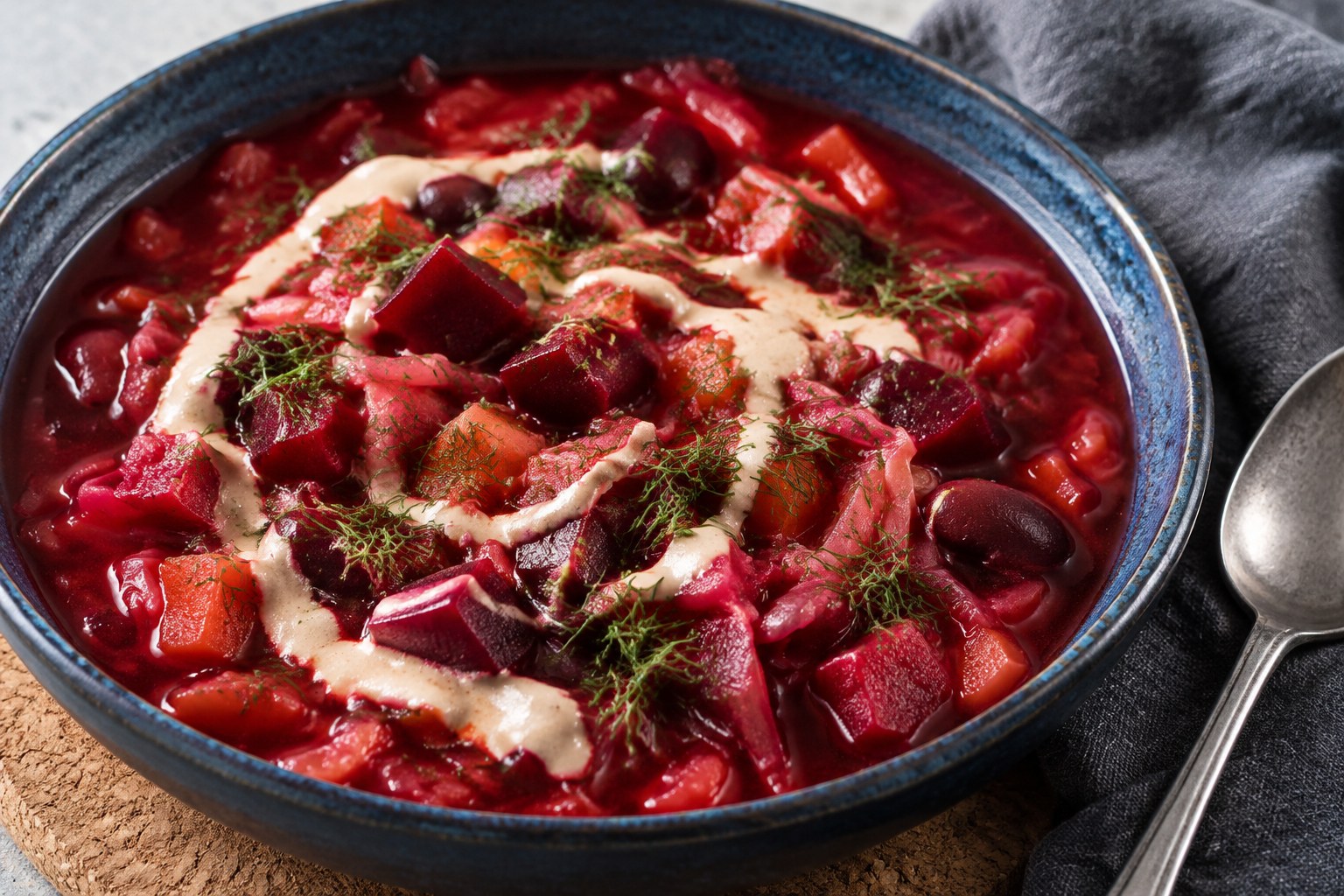
Beet Cabbage and Kidney Bean Borscht
- Total time:
- about 60 min
- Makes:
- Serves 4
Ruby beet broth, toasted caraway and fresh dill meet a tart tahini swirl in this hearty bean borscht.
On the plate: 7 Top 21 foods
DINNER BREAKDOWN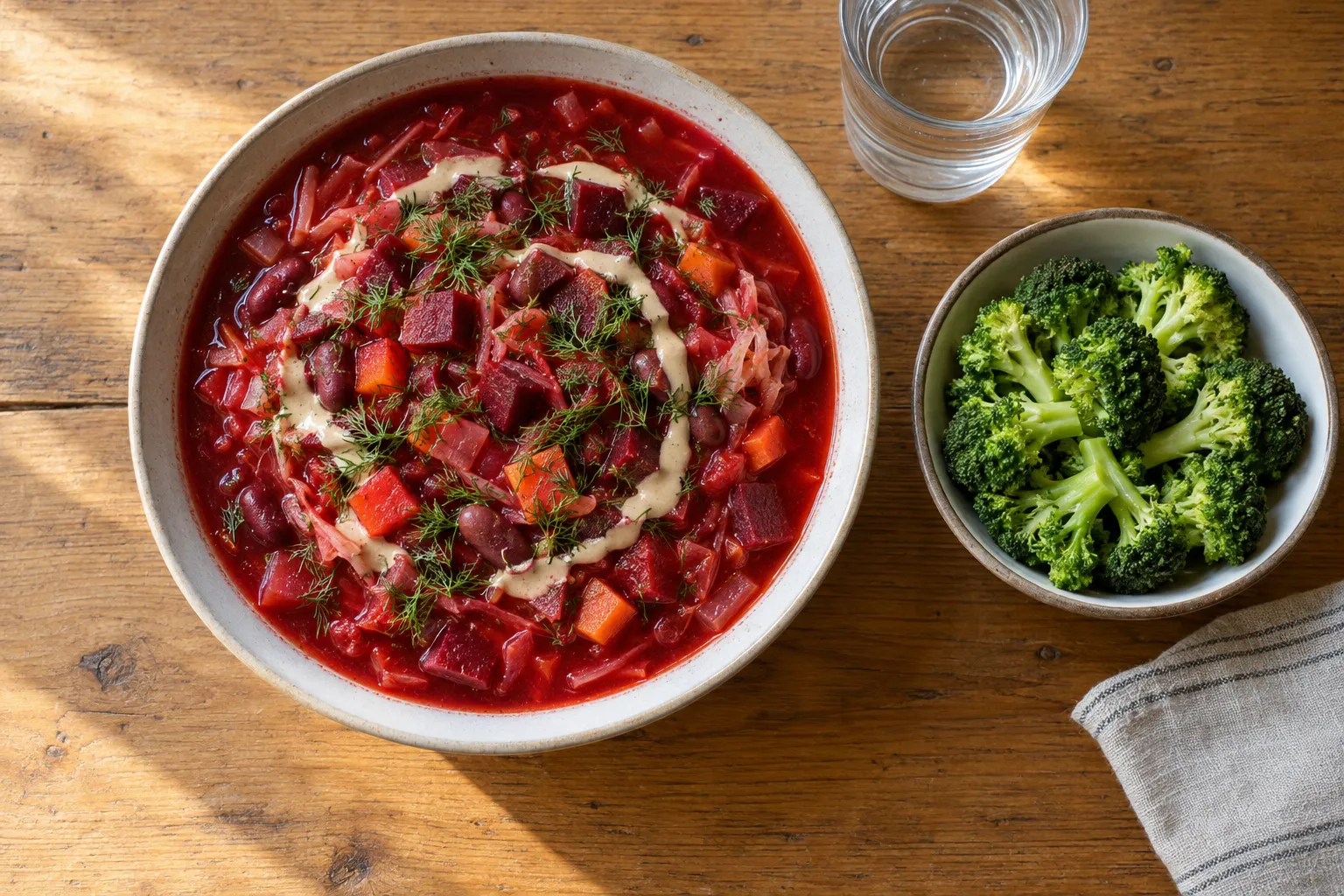
Sides are serving suggestions to round out the meal; only the dish itself is covered by the recipe below. About 7 Top 21 foods a meal (21 a day, repeats included) is a planning baseline, not a tested diet; some meals will have more, some fewer.
The ingredients
Makes: Serves 4
- 600 g cooked kidney beans, drained
- 350 g beets, peeled and cut into 1 cm dice
- 300 g cabbage, finely shredded
- 200 g carrots, cut into 1 cm dice
- 160 g onion, diced
- 10 g garlic, minced
- 30 g tomato paste
- 3 g caraway seeds
- 25 ml red wine vinegar
- 20 g fresh dill, chopped
- 40 g tahini
- 25 ml lemon juice
- 1200 ml water
- 3 g fine salt
Ingredient flags: sesame. Check labels and shared equipment; this is not an allergy-safety certification.
Clinical Specs
- Prep & cooking
- 60 min estimated total · 30 min estimated active · overlapping tasks; allow longer as needed
- Added extracted oil
- 0g
Instructions
Kitchen Lab Notes
Toast caraway, sweat roots in a tomato base, then simmer cabbage and beans and finish with dill and tahini. Toast the caraway in a dry heavy pot over medium heat for 45 seconds until fragrant; transfer to a small dish. Add the onion and 80 ml of the measured water to the pot and cook over medium-high heat for 8–10 minutes until soft and lightly golden, deglazing with splashes of measured water. Lower to medium heat. Add the garlic and tomato paste; stir for 2 minutes until the paste darkens. Add the beets, carrots, toasted caraway, salt and 1000 ml of the water. Scrape the bottom and bring to a boil.
- 01
Toast the caraway in a dry heavy pot over medium heat for 45 seconds until fragrant; transfer to a small dish. Add the onion and 80 ml of the measured water to the pot and cook over medium-high heat for 8–10 minutes until soft and lightly golden, deglazing with splashes of measured water.
- 02
Lower to medium heat. Add the garlic and tomato paste; stir for 2 minutes until the paste darkens. Add the beets, carrots, toasted caraway, salt and 1000 ml of the water. Scrape the bottom and bring to a boil.
- 03
Cover and simmer over low heat for 18–20 minutes, until the beet cubes are almost tender when pierced with a knife.
- 04
Add the cabbage, kidney beans and remaining water except 40 ml. Simmer partly covered for 12–15 minutes, until the cabbage is silky and the beets are fully tender.
- 05
While the cabbage cooks, whisk the tahini with the lemon juice and reserved 40 ml water until smooth and pourable. Take the soup off the heat and stir in the vinegar and half the dill.
- 06
Portion the ruby vegetables and beans with their broth. Swirl a quarter of the tahini sauce over each portion and scatter with the remaining dill.
The evidence behind the ingredients
Explore the dietary research linked below. It offers context for these ingredients, not evidence that this particular dish treats or prevents disease.
Cooking times and yields vary based upon cooking techniques and ingredients. Follow package directions and check for doneness.
David J A Jenkins, Cyril W C Kendall, Livia S A Augustin, Sandra Mitchell et al.. Archives of internal medicine, 2012. PMID 23089999 · DOI