FIELD GUIDES / NANO FUNDAMENTALS
Assemble a Grain Bowl Around Contrasting Textures
Practical oil-free cooking notes
Give each component a clear place and purpose instead of piling everything into one soft mixture.
FIELD NOTE 01
Choose the bite before the ingredients
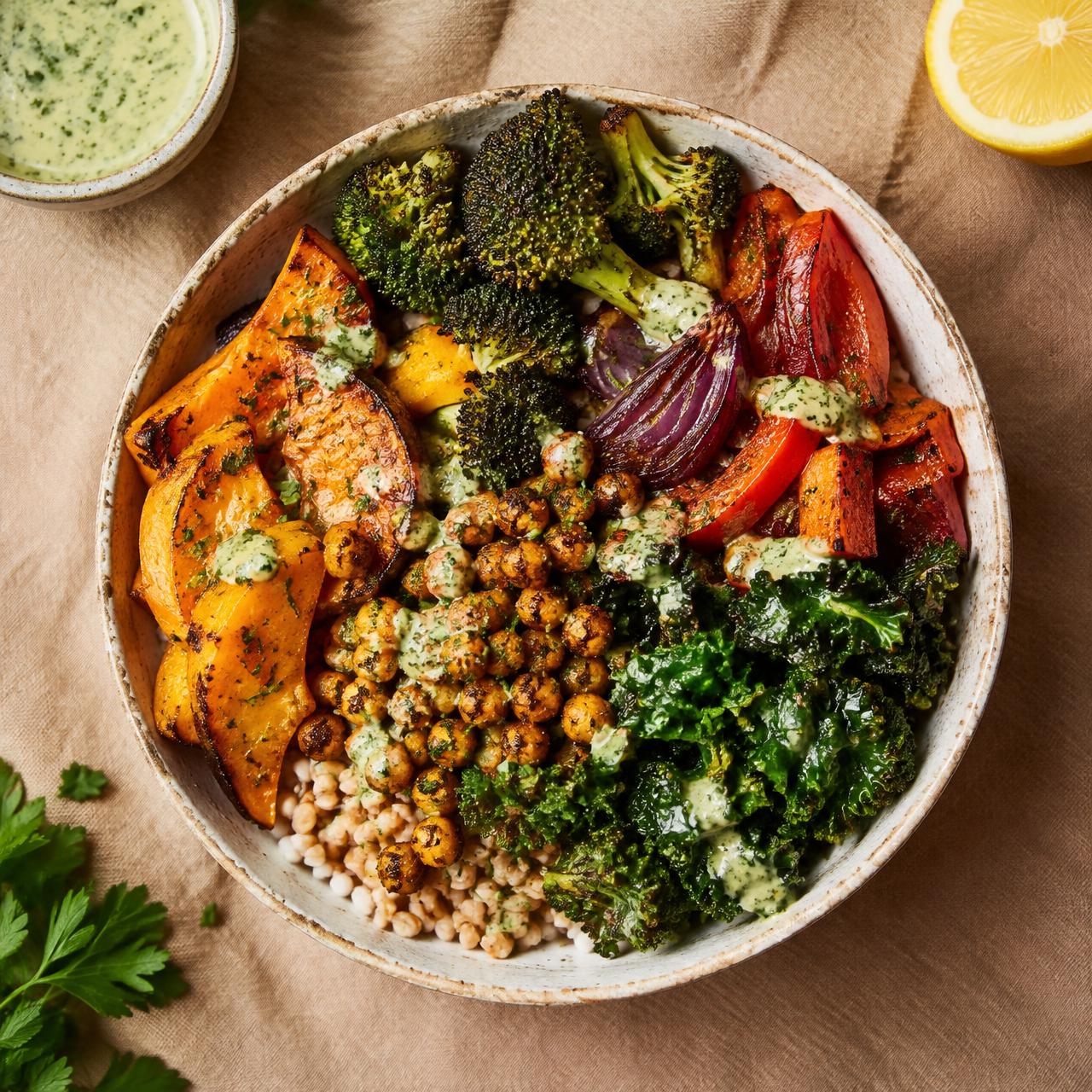
Plan a bowl with a spoonful of grain, a substantial bean or tofu component, two vegetable textures, and a sauce that connects them. For example, pair chewy barley with white beans, tender roasted carrots, crisp shredded cabbage, and a lemon-herb bean sauce. This is an assembly framework rather than a requirement to use specific foods. Think about how the components will meet on a fork: a bowl of small grains and enormous vegetable pieces is awkward even when each part tastes good on its own.
FIELD NOTE 02
Prepare the base to stay separate
Cook the grain according to its package, checking texture rather than assuming every variety needs the same water or time. Let it stand as directed, then fluff gently with a fork. Drain cooked beans well and season them separately so they are not relying on sauce pooled at the bottom. If using chilled components, keep them refrigerated until assembly. For a warm bowl, warm the grain and beans first, then add raw vegetables afterward so those vegetables retain the crispness you deliberately planned.
FIELD NOTE 03
Use zones with a little overlap
Spoon the grain into a shallow mound rather than compressing it into a dense layer. Add the beans or tofu alongside, then place the cooked and raw vegetables in separate loose groups with slightly overlapping edges. This keeps textures identifiable but still makes it easy to gather a mixed forkful. Cut long leaves and vegetable ribbons into manageable lengths. A bowl should not require a second cutting session at the table, and tightly packed sections can make a modest portion unexpectedly difficult to mix.
FIELD NOTE 04
Dress the meeting points
Spoon sauce across the places where the components meet instead of burying the entire bowl beneath a thick blanket. Keep a little sauce back so the diner can adjust the grain after the first few bites. Add toasted seeds or chopped herbs last and serve promptly. When packing the same combination, keep crisp vegetables and sauce separate from the moist base until eating. The grain-bowl distinction here is deliberate texture placement: it is not necessary to cook a large inventory of components to make one satisfying bowl.