FIELD GUIDES / NANO FUNDAMENTALS
Two Bases, One Better Week
Whole grains, legumes, vegetables and a separate sauce
A flexible component plan inspired by food-group variety, not a copied checklist or prescribed menu.
FIELD NOTE 01
Choose components, not seven identical meals
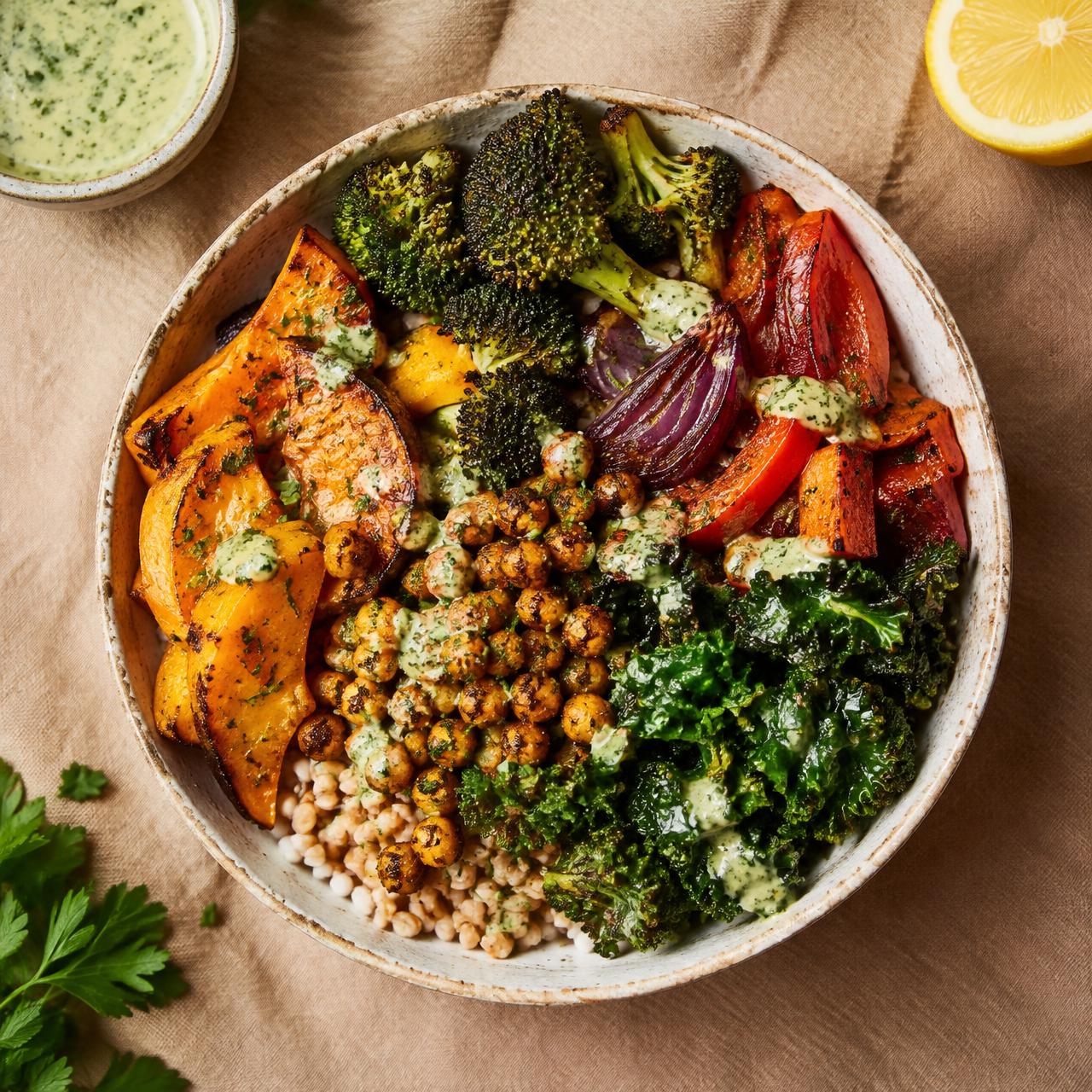
Pick one whole grain and one cooked legume. Add two vegetable preparations and a sauce. For this edition: hulled barley, lentils, cooked beets, shredded cabbage and carrot-bean sauce. Change the proportions and finish each meal with fresh herbs or citrus.
FIELD NOTE 02
Start the slowest ingredient first
Barley takes the longest. While it simmers, prepare vegetables and blend a sauce. Using previously cooked beans or lentils keeps the second cooking task short. Package directions take precedence over a planning estimate.
FIELD NOTE 03
Assemble at serving time
Keep sauce and raw vegetables separate from cooked bases. Make a warm bowl, a chopped salad or a vegetable-heavy soup using the same base components. Keep food preparation and storage consistent with local food-safety guidance.
FIELD NOTE 04
Variety is a prompt, not proof of completeness
This component formula is our original kitchen workflow, not a validated health score or a complete nutrition prescription. For the fruits and vegetables with the strongest research behind them, see the NANO Top 21. Individual needs still matter.
FIELD NOTE 05
Read the source resources in their original form
The health-kit handouts carry a noncommercial, no-derivatives license. We link to NutritionFacts’ original resources rather than modifying or rebranding them. Our guides and recipe concepts are independently written.